Numeric keypad
| 1 | 2 | 3 |
| 4 | 5 | 6 |
| 7 | 8 | 9 |
| * | 0 | # |
Touch, carried across distance
Screenless, voiceless messaging.
Telehaptics carries text messages between people through tactile feedback.
Explore the interface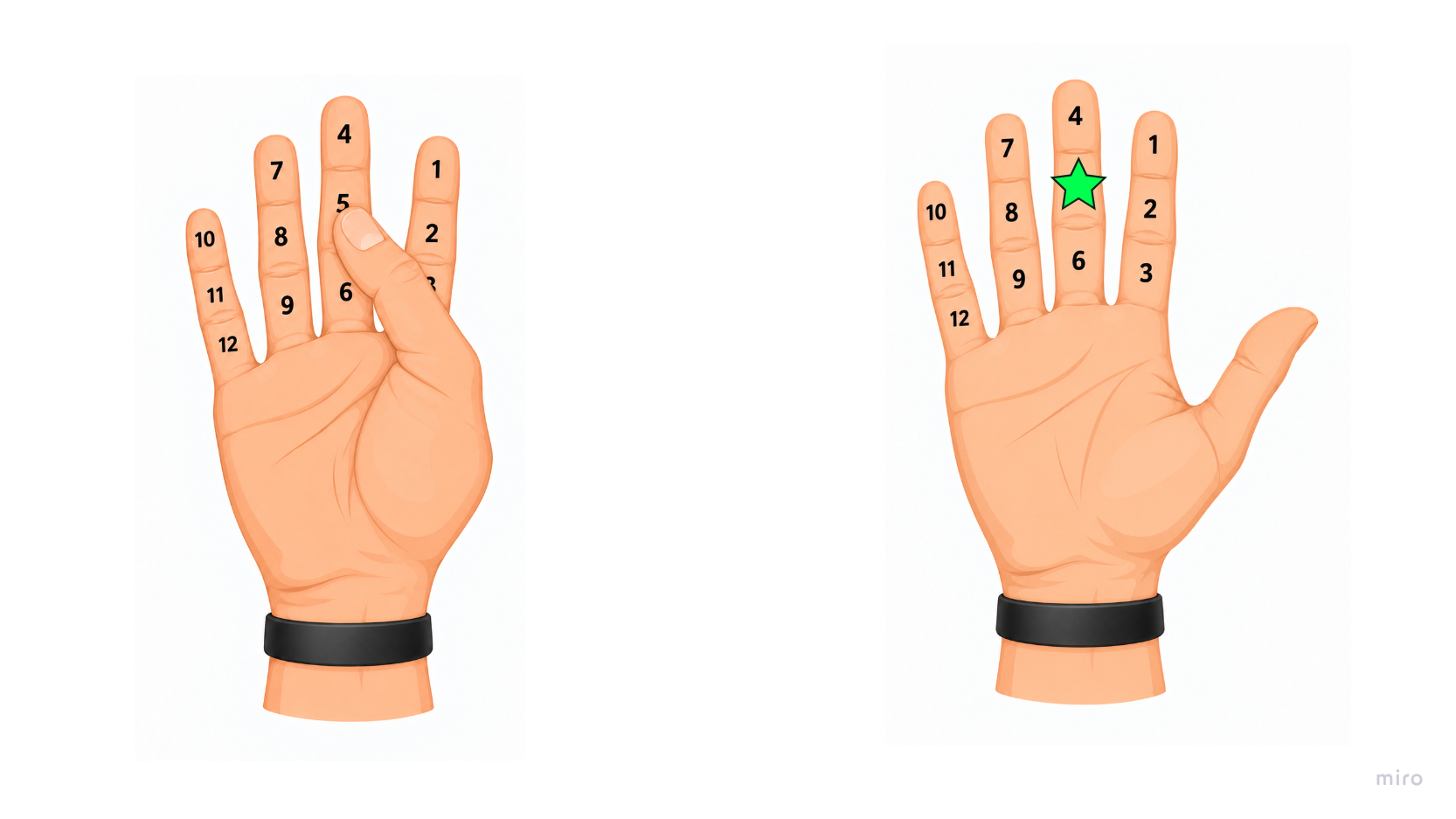
No separate keyboard or screen
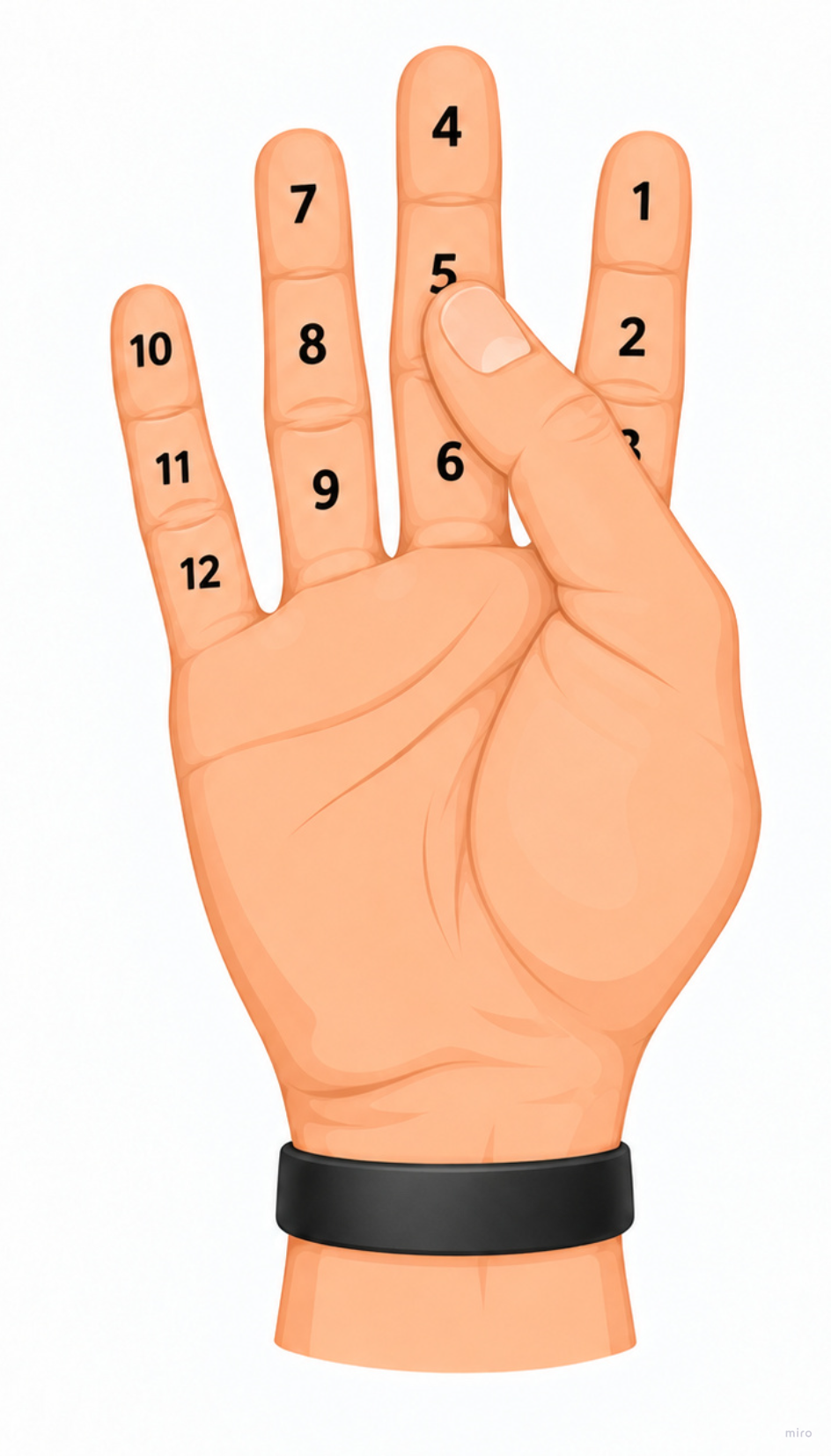
The hands can serve as both input and display. A thumb selects a phalange; sensing technology reads the touch, and feedback technology can return a sensation at the corresponding point.
SENDING
Touch can be detected through methods such as:
RECEIVING
Feedback can be delivered through methods such as:
A shared character map
Four fingers—excluding the thumb that selects each location—with three phalanges apiece create 12 touch points in a four-row, three-column grid.
Map each point to a key or character group. A familiar keypad or custom character layout can use the same 4 × 3 surface.
fMRI maps of all finger phalanges in the somatosensory cortex| 1 | 2 | 3 |
| 4 | 5 | 6 |
| 7 | 8 | 9 |
| * | 0 | # |
| ABC | DEF | GHI |
| JKL | MNO | PQR |
| STU | VWX | YZ. |
| Space | Back | Send |
| ↖ | ↑ | ↗ |
| ← | • | → |
| ↙ | ↓ | ↘ |
| Back | Home | Enter |
| 💩 | 🍽️ | 🚗 |
| 😂 | 😞 | 🎉 |
| 🚫 | 💯 | ❤️ |
| 👍 | 👎 | 🆘 |
Designed with blind people in mind
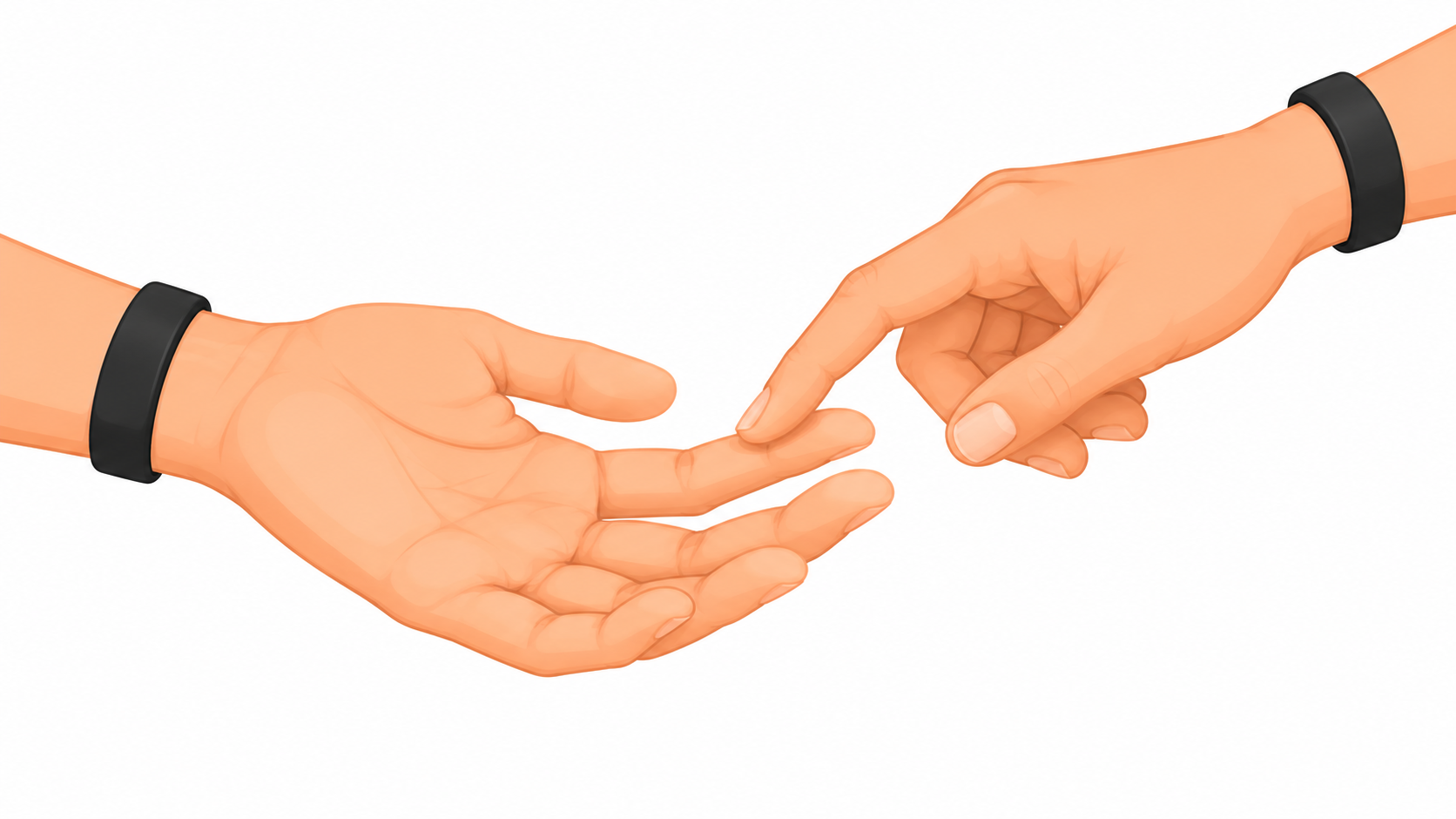
Two deaf-blind people can communicate without any devices or batteries, simply by tapping each other’s phalanges. A shared tactile map turns each tap into a deliberate message.
A tactile interface
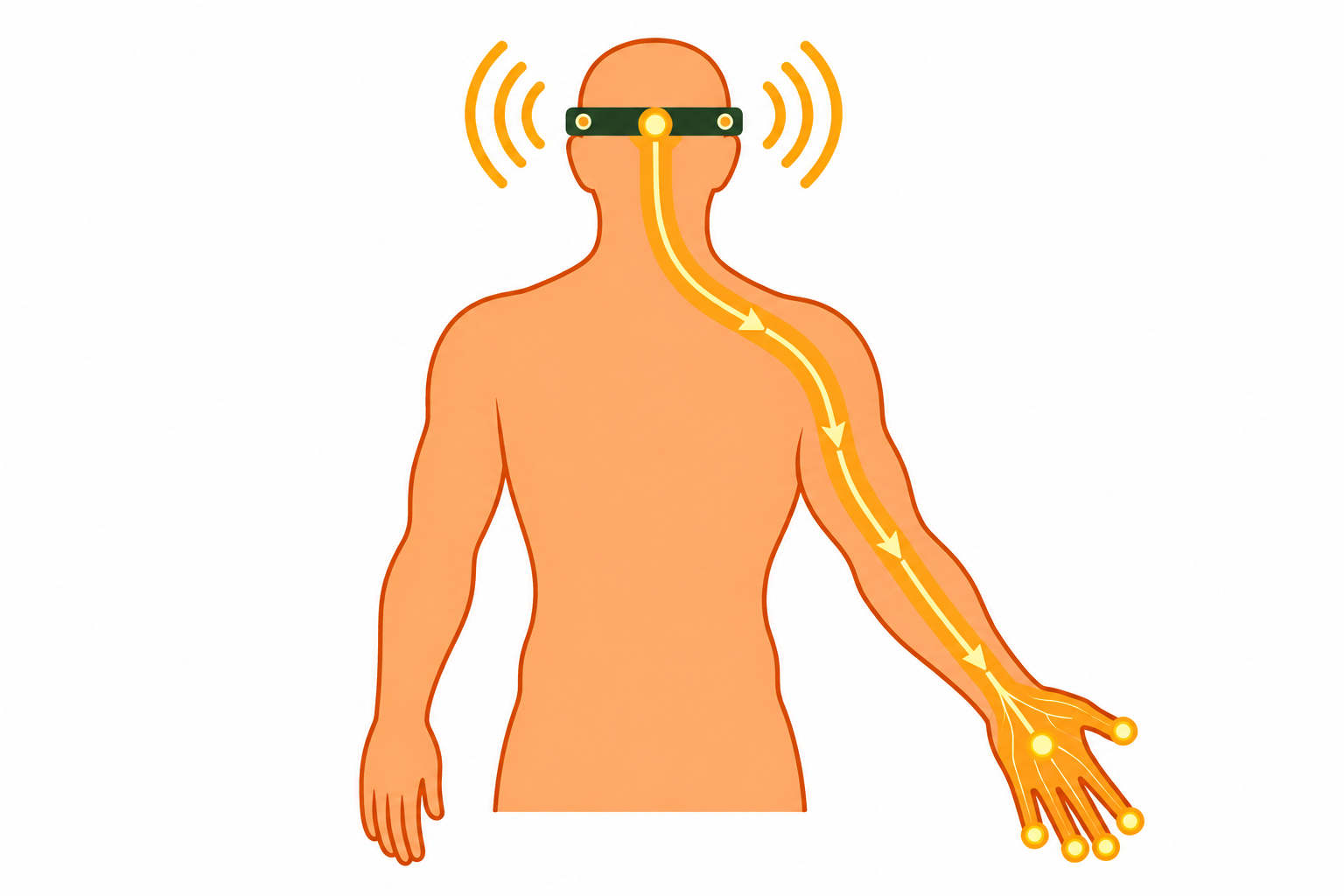
Each finger tap has a known location, giving EEG sensors a clear, concrete signal to detect instead of trying to decode an unspoken thought or infer an intended movement.
AI does not need to translate these locations into text. The two people share a tactile map and understand what each tap means directly.
fMRI study mapping all finger phalanges in the somatosensory cortexInput without a controller
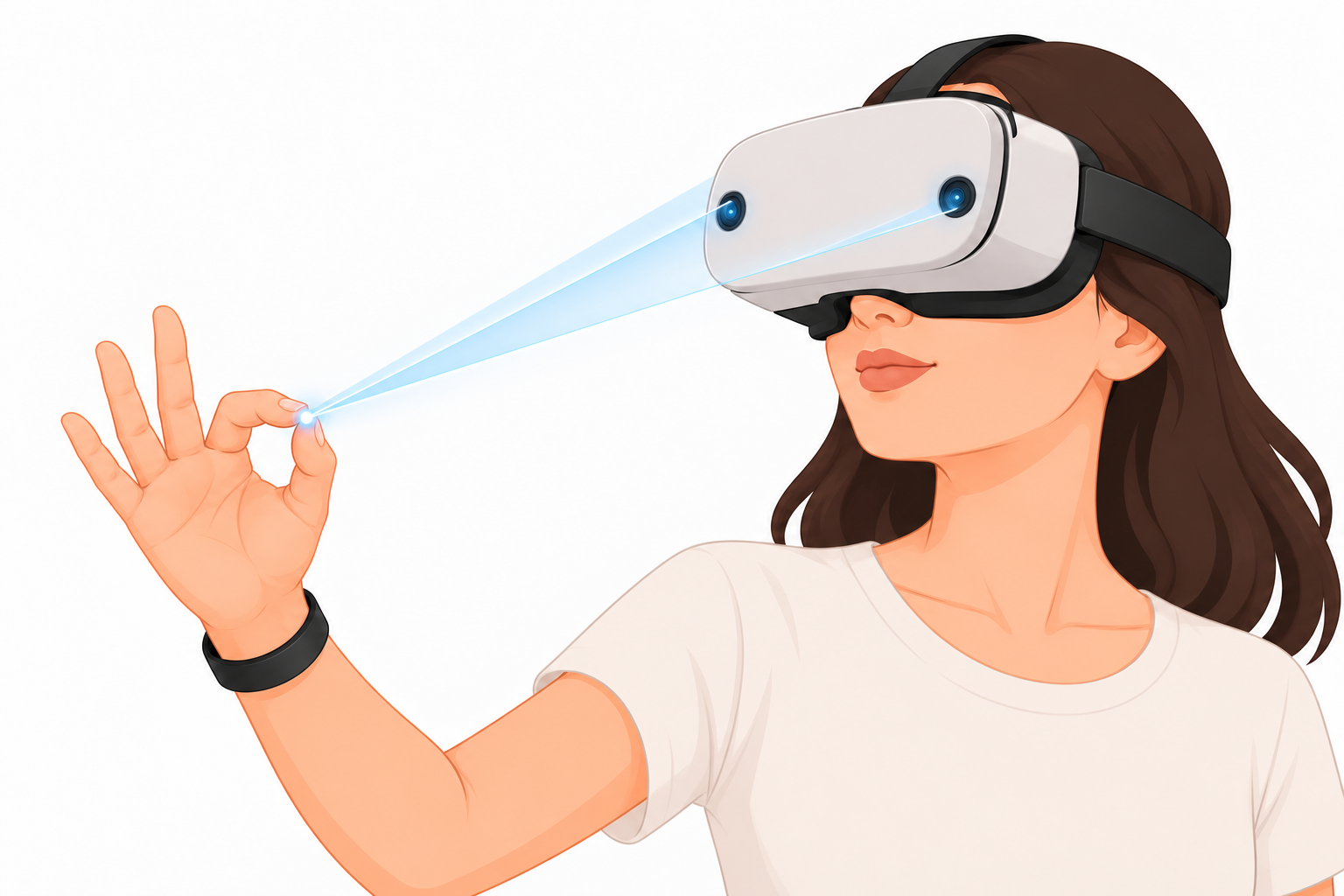
Camera-based VR hand tracking can estimate finger-joint positions. On supported headsets, an app could recognize phalange taps and map them to an intuitive virtual keyboard, without reaching for a controller.
The same 4 × 3 map is Meta Neural Band-ready: an app could map the band’s EMG-detected finger gestures to the same keys.
Meta VR hand tracking Meta Neural Band and finger gestures